What a Content Strategy Consultant Actually Does and When to Hire One
Content Strategy Consultant


There’s a specific moment when hiring a content strategy consultant starts to feel less like an optional upgrade and more like a necessity: you’re publishing regularly, your team is genuinely working hard, and the results still aren’t matching the effort. If that sounds familiar, you’ve probably already searched for what a content strategy consultant actually does, half-hoping the answer will confirm you need one, and half-worried you’ll spend money on something your internal team should be able to figure out on their own.
This guide breaks down exactly what a content strategy consultant does day to day, how that differs from hiring a writer or a marketing generalist, and the specific signals that indicate it’s genuinely time to bring one in, rather than continuing to push harder in the same direction.
What a Content Strategy Consultant Actually Does on a Day-to-Day Basis
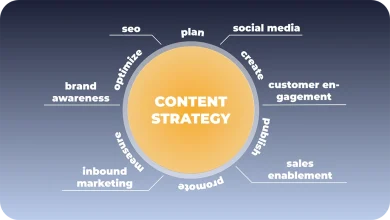
At its core, a content strategy consultant is a professional who plans, develops, and manages content initiatives to meet specific business goals and audience needs, establishing the strategy for creating, delivering, and governing content across digital platforms. That’s a broader mandate than it sounds. Rather than simply writing articles or managing a social calendar, a content strategy consultant develops a long-term plan that ensures every piece of content supports measurable objectives, whether that’s increasing organic traffic, generating qualified leads, improving search rankings, or strengthening brand authority.
In practice, this usually starts with a content audit, reviewing existing material to identify gaps, duplication, and underperformance, alongside a hard look at the audience, competitors, and current market trends. From there, a content strategy consultant typically develops messaging frameworks and tone-of-voice guidelines, maps content directly to the customer journey and specific brand pillars, and builds editorial calendars structured around defined KPIs rather than an arbitrary publishing cadence. Throughout the engagement, they also work cross-functionally with SEO specialists, UX designers, and technical teams to ensure content integrates smoothly into a company’s broader digital presence, not just its blog.
How a Content Strategy Consultant Differs From a Writer or General Marketer
This is where a lot of confusion sets in for founders and marketing leads evaluating whether they need this kind of help. A content strategy consultant isn’t primarily a content creator, they’re a planner and a systems thinker, even though many have hands-on writing and editing backgrounds themselves. A talented writer can produce excellent individual pieces without necessarily having the strategic training to determine which pieces should exist in the first place, how they connect to one another, or how success should actually be measured.
Similarly, a general marketing consultant might understand paid acquisition, brand positioning, or email campaigns broadly, without the specific depth a content strategy consultant brings to content architecture, topic clustering, and editorial governance. The distinction matters practically: if your problem is that content isn’t getting written fast enough, you likely need a writer or additional production capacity. If your problem is that content is being produced consistently but isn’t building toward anything cohesive, that’s a strategy gap, and it’s the specific problem a content strategy consultant is trained to solve.
The Typical Process a Content Strategy Consultant Follows With a New Client
While every engagement varies by client and industry, most content strategy consultants follow a fairly consistent structural process. It begins with a content audit and assessment, evaluating the current content landscape, target audience, competitive positioning, existing initiatives, and the specific outcome the business wants to achieve, whether that’s more sales, deeper engagement, or stronger brand recognition.
From there, the consultant typically sits down with key stakeholders, often senior executives who can provide insight into business priorities before the strategy work proceeds. During these conversations, the consultant and stakeholders define success metrics, project objectives, and specific content goals, frequently referencing key performance indicators that will be used to evaluate progress throughout the engagement. As the strategy develops, the consultant keeps stakeholders updated, refining the plan based on real performance data rather than treating the initial strategy document as a fixed, unchangeable roadmap.
Signals That Indicate It’s Genuinely Time to Bring in a Content Strategy Consultant
Not every business needs outside strategic support, and it’s worth being honest about when the investment actually makes sense. The clearest signal is a mismatch between effort and results: if your content output has increased significantly without a corresponding increase in traffic, leads, or revenue, that points to a structural strategy problem rather than something more content or better execution alone will fix.
A second signal worth watching for is an inability to clearly articulate why specific content exists. If your team struggles to explain, with real specificity, why a particular piece was created, who it’s for, and what action it’s meant to drive, that gap in clarity is exactly what a content strategy consultant is brought in to close. A third signal is competitive pressure: if competitors are visibly building topical authority and consistently appearing where your target customers are searching, while your own content feels scattered by comparison, that gap tends to widen the longer it goes unaddressed without a clearer strategic direction.
Major Business Transitions Are Often the Ideal Moment to Bring One In
Certain business moments create an almost unavoidable need for a content strategy consultant, even for companies that were previously managing content perfectly well on their own. Entering a new market, launching a new product line, or repositioning a brand all fundamentally change what content needs to accomplish, and content strategy built for a previous positioning can actively work against a new one if it isn’t reassessed.
These transition points tend to be the ideal moment to bring in outside expertise specifically because you’re not simply optimizing an existing system, you’re building a new one intentionally, before old habits and assumptions have had time to calcify around outdated goals.
What You Should Reasonably Expect to Receive From the Engagement
It’s worth setting realistic expectations before hiring, since not every engagement with a content strategy consultant looks the same. At minimum, expect a documented content strategy that includes clearly defined content pillars, a structured publishing framework tied to specific business goals, and measurable benchmarks your team can track independently going forward, rather than a vague document full of general best practices.
Beyond the strategic framework itself, many consultants also help establish ongoing governance, meaning clear decisions about who creates what, how content moves through the production pipeline, and how performance gets reviewed and adjusted over time. The goal of a strong engagement isn’t indefinite dependence on the consultant; it’s building internal clarity and capability your team can sustain well after the formal engagement ends.
What a Content Strategy Consultant Typically Costs and How Engagements Are Structured
Pricing for a content strategy consultant varies considerably based on experience level, engagement scope, and whether you’re working with an independent freelancer or an agency-based strategist. Some consultants charge a flat project fee for a defined strategy document and audit, while others work on a retainer basis if ongoing governance and adjustment support is part of the arrangement. Junior-to-mid-level strategists working on narrower engagements typically charge less than senior consultants who’ve previously led enterprise-wide content strategies, managed larger budgets, and worked directly with executive teams across multiple industries.
It’s reasonable to ask any consultant you’re evaluating for a clear breakdown of what’s included in their proposed engagement, whether that’s a one-time audit and strategy document, ongoing implementation support, or a longer retainer relationship, since the scope difference between these options can be substantial even when the initial quoted price looks similar.
What to Look for When Choosing the Right Consultant for Your Business
Not every content strategy consultant will be the right fit for every business, and evaluating a few key traits before committing tends to prevent a mismatched engagement. Look for consultants who ask detailed questions about your business model, audience, and competitive landscape before proposing solutions, rather than immediately pitching a generic framework regardless of your specific situation. A strong consultant should also be comfortable presenting data-backed reasoning behind their recommendations, and willing to tell you honestly if your current content volume should actually decrease rather than increase, a sign they’re prioritizing genuine strategic outcomes over simply generating more billable work.
It’s also worth reviewing a prospective consultant’s past engagements or case studies, particularly ones involving businesses at a similar stage or within a similar industry to your own. For a deeper look at how the broader content strategist role has evolved and what skills separate strong strategists from generalist marketers, Robert Half’s overview of the content strategy profession offers a detailed breakdown worth reviewing, and Built In’s content strategist job description provides a useful reference for the specific responsibilities and deliverables you should expect from a well-scoped engagement.
Making the Decision With Confidence
If you’ve recognized your business in two or more of the signals covered here- output growing faster than results, an inability to clearly articulate content purpose, visible competitive pressure, or a major business transition on the horizon, that’s a strong indication a content strategy consultant would provide real value right now. The businesses that benefit most from this kind of engagement aren’t necessarily struggling; often, they’re performing reasonably well and correctly sense they could be doing significantly better if the underlying strategic direction were clearer.
Rather than waiting for a dramatic decline in performance to justify the investment, the more useful approach is recognizing the questions your team currently can’t answer with confidence about your own content, and treating those unanswered questions as the real signal worth acting on.
Frequently Asked Questions
What’s the difference between a content strategist and a content writer?
A content writer focuses on producing individual pieces of content, while a content strategy consultant focuses on the broader plan determining what content should exist, why, and how it connects to business goals. Many strategists have writing backgrounds, but the roles require different core skill sets.
Do small businesses or startups actually need a content strategy consultant?
It depends on the stage. Very early-stage companies still validating their core offering may not benefit yet, but once a business has a defined audience and value proposition, a content strategy consultant can help build a more efficient foundation than trial-and-error content production alone.
How long does a typical content strategy consulting engagement last?
This varies widely. Some engagements are a single audit and strategy document delivered over a few weeks, while others involve ongoing retainer relationships lasting several months to support implementation and adjustment over time.
What deliverables should I expect from a content strategy consultant?
At minimum, expect a documented strategy including defined content pillars, a publishing framework tied to specific business goals, and measurable benchmarks. Some engagements also include governance frameworks and ongoing implementation support.
Can a content strategy consultant help with SEO specifically?
Yes, SEO is typically a core part of the work, since strategists often conduct audits that include keyword research, content gap analysis, and structural recommendations designed to improve organic search visibility alongside broader content goals.
How do I know if my content problem is a strategy issue versus an execution issue?
If your team can clearly explain why each piece of content exists and it’s simply not getting produced fast enough or polished enough, that’s an execution issue. If output has increased without corresponding results, or your team struggles to explain the purpose behind specific content, that points to a strategy gap.
Should a content strategy consultant work independently or alongside my existing marketing team?
Ideally alongside your existing team. A strong consultant builds a framework your internal team can execute and sustain, rather than replacing your team or creating ongoing dependency on outside involvement.
What questions should I ask before hiring a content strategy consultant?
Ask about their process for auditing existing content, how they define and measure success, examples of past engagements with similar businesses, and exactly what’s included in their proposed scope, whether that’s a one-time strategy document or ongoing implementation support.